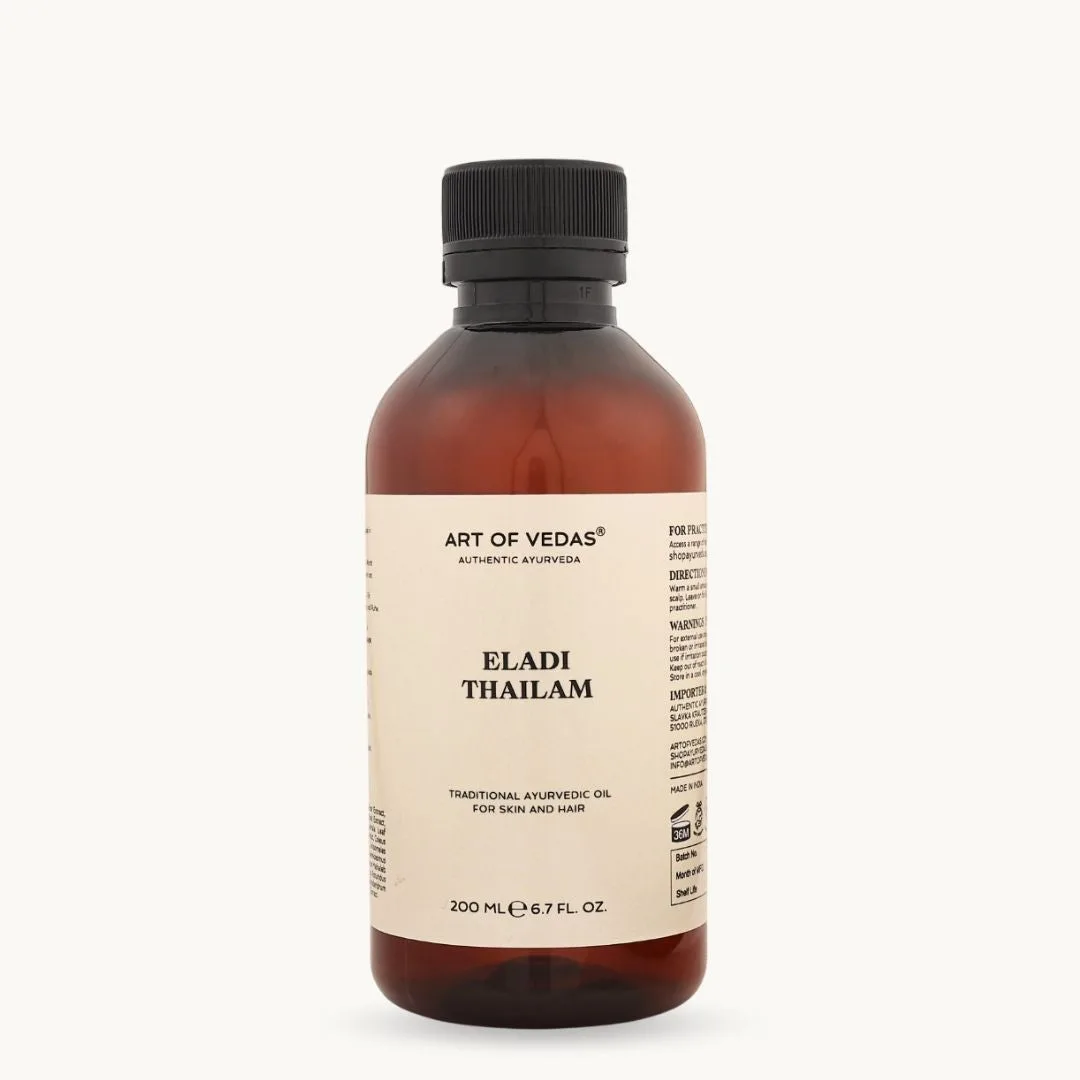
Wer dem Wort Eladi begegnet, meist auf dem Etikett eines klassischen Öls, fragt sich natürlicherweise, was es bedeutet. Die Antwort öffnet eine kleine Tür dazu, wie der Ayurveda seine Kräuter ordnet. Eladi ist keine einzelne Pflanze, sondern der Name einer Gruppe, einer klassischen Familie aromatischer Pflanzen, die mit Ela beginnt, dem Kardamom. Dieser Ratgeber von Art of Vedas erläutert die Bedeutung von Eladi, führt in die klassische Vorstellung einer Kräutergruppe ein und zeigt, wie sie dem beliebten Eladi Thailam ihren Namen gibt.
Was Eladi bedeutet
Das Wort Eladi zerfällt sauber in zwei Teile. Ela ist der Sanskritname für Kardamom, jene duftende Samenkapsel, die in der Küche wie in der klassischen Heilkunde so hoch geschätzt wird. Die Endung adi bedeutet und das Übrige oder und andere. Eladi heißt somit Kardamom und die anderen, eine Kurzform für eine ganze Gruppe von Kräutern unter Führung des Kardamoms. Steht Eladi am Anfang eines Rezepturnamens, so ist damit stets diese klassische, vom Kardamom angeführte Gruppe angezeigt.
Die klassische Vorstellung eines Gana
Der Ayurveda fasst Kräuter häufig zu benannten Gruppen zusammen, den sogenannten Ganas, die sich jeweils um eine gemeinsame Eigenschaft oder um ein Leitkraut versammeln. Der Eladi Gana ist eine solche Gruppe, eine Zusammenstellung warmer, aromatischer Pflanzen, die wegen ihres Dufts und ihrer Nähe zu Haut und Sinnen vereint wurden. Eine Gruppe nach ihrem ersten Mitglied zu benennen, ist eine elegante klassische Gewohnheit, denn so kann ein einziges Wort für eine sorgfältig gewählte Kombination stehen. Nach derselben Logik entstanden Dashamoola, die zehn Wurzeln, und Triphala, die drei Früchte.
Die Kräuter der Eladi-Gruppe
Die Eladi-Gruppe ist um warme, süß duftende Pflanzen herum aufgebaut. Kardamom führt sie an, begleitet in der klassischen Überlieferung von duftenden Gefährten wie der Zimtrinde, dem aromatischen Blatt, das als Tejpatra bekannt ist, und weiteren süßen, wärmenden Kräutern. Die genauen Mitglieder unterscheiden sich zwischen den Texten ein wenig, der Charakter jedoch bleibt gleich: aromatisch, wärmend und den Sinnen angenehm. Süße, besänftigende Pflanzen wie Yashtimadhu, die Süßholzwurzel, gehören in dieselbe Welt, und über dieses Kraut lesen Sie in unserem Ratgeber zu Mulethi, der Süßholzwurzel im Ayurveda.
Traditionell wird die Gruppe für Folgendes geschätzt:
- einen warmen, aromatischen Charakter, der in klassischen Haut- und Schönheitsrezepturen hoch im Kurs steht
- ihren Duft, seit jeher mit Frische und dem Erfreuen der Sinne verbunden
- einen Platz im Herzen klassischer Öle und Pulver für den Teint
- die Art, wie ein einziger Gruppenname eine ganze durchdachte Kombination fasst
Von der Gruppe zum Eladi Thailam
Der bekannteste Ausdruck dieser Gruppe ist Eladi Thailam, jenes klassische Öl, in dem die vom Kardamom angeführten Kräuter zu einem duftenden Hautöl verarbeitet werden. Unser Eladi Thailam führt diese Tradition fort und steht neben Zubereitungen für den Teint wie unserem Mukhalepa Ubtan, einer klassischen Gesichtsauflage im gleichen aromatischen Geist. Wie das Öl angewendet wird, erfahren Sie in unserem Ratgeber zu Eladi Thailam, Vorzüge und Anwendung. Wie aus solchen Kräutergruppen Pulver werden, erläutert der Ratgeber zum klassischen Churnam.
Wen die Eladi-Gruppe anzieht
Das Interesse an Eladi erwächst meist aus einer Vorliebe für aromatische, klassische Rezepturen und aus der Neugier darauf, wie der Ayurveda seine Kombinationen benennt. Geschätzt wird die Gruppe nach Vorliebe und Überlieferung und nicht nach einer Diagnose. Ob eine klassische Rezeptur zur persönlichen Routine passt, beantwortet am besten eine qualifizierte Ayurveda-Fachkraft.
Häufige Fragen
Was bedeutet Eladi?
Eladi bedeutet Kardamom und die anderen. Ela ist der Kardamom und adi bedeutet und das Übrige, sodass der Begriff eine vom Kardamom angeführte Kräutergruppe benennt.
Ist Eladi ein einzelnes Kraut?
Nein. Eladi ist der Name einer klassischen Gruppe aromatischer Kräuter und nicht der einer einzelnen Pflanze.
Was ist ein Gana im Ayurveda?
Ein Gana ist eine klassische Kräutergruppe, die sich um eine gemeinsame Eigenschaft oder um ein Leitkraut versammelt, wie die vom Kardamom angeführte Eladi-Gruppe.
Welche Kräuter gehören zur Eladi-Gruppe?
Sie ist um Kardamom herum aufgebaut, begleitet von duftenden, wärmenden Gefährten wie Zimt und aromatischen Blättern. Die genauen Mitglieder unterscheiden sich zwischen den Texten.
Wie hängt Eladi mit Eladi Thailam zusammen?
Eladi Thailam ist das klassische Öl, das mit der vom Kardamom angeführten Eladi-Gruppe hergestellt wird, und daher stammt sein Name.
"Dieses Produkt ist ein Nahrungsergänzungsmittel und nicht dazu bestimmt, Krankheiten zu diagnostizieren, zu behandeln, zu heilen oder zu verhüten."